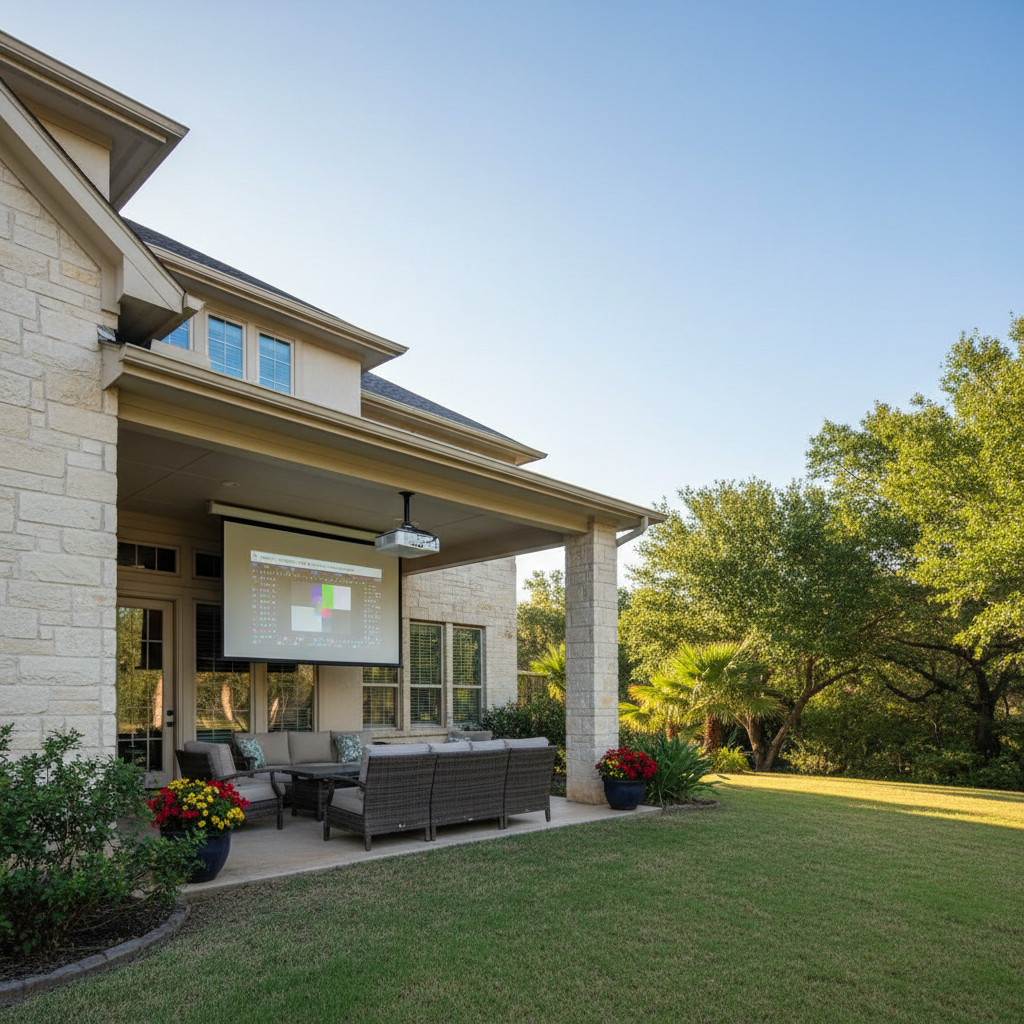
So, you're dreaming of that big-screen experience, huh? A projector can totally transform your living room or dedicated media space. It's awesome when it's done right. But man, I've seen some real head-scratchers and money pits when folks try to tackle this without thinking things through, or worse, hire the wrong crew.
Mistake #1: Ignoring Your Room's Realities (It's Not Just a Blank Wall)
This is probably the biggest one I see. People get excited about a projector's throw distance and brightness specs, but they forget about the room itself. You can't just slap a projector on the ceiling and call it a day.
- Light Control: Is your room actually dark enough? San Antonio gets some serious sun, especially in those west-facing rooms. If you've got lots of windows and don't plan on blackout curtains or shades, you're going to be fighting a losing battle. A bright projector can only do so much against direct sunlight.
- Wall Color & Texture: Are you projecting onto a white, smooth wall? Great. Is it a light beige, textured wall? Not so great. You'll lose contrast, color accuracy, and sharpness. A dedicated screen is almost always worth the investment.
- Room Dimensions & Seating: Where are people going to sit? How far back? This dictates your screen size and projector placement. You don't want to be craning your neck or have the image feel too small or too big for the space.
Before you buy anything, really look at your room. Think about how you'll use it and what its limitations are.
Mistake #2: DIYing Without the Right Tools or Know-How
I get it, you're handy. You've watched a few YouTube videos. But projector installation isn't just mounting a TV. There's a lot more going on, especially if you want a clean, professional look.
- Cable Management: Are you running power? HDMI? Network cables? Are they going to be dangling everywhere, or are you going to fish them through walls and ceilings? This often involves cutting drywall, running lines, and then patching things up. It's not a quick job.
- Mounting Precision: Projector mounts need to be perfectly level and secure. You're drilling into studs, often in a ceiling, and dealing with significant weight. A shaky projector means a crooked image, and nobody wants that.
- Calibration: Once it's installed, you can't just turn it on and expect perfection. Projectors need to be calibrated for optimal picture quality — focus, zoom, keystone correction, color settings. It's a fine art to get it just right.
If you're not comfortable with all of that, you're better off calling someone who does this day in and day out. You'll save yourself a ton of frustration and potential damage.
Mistake #3: Picking the Wrong Installer (The Cheapest Isn't Always Best)
This is where I really see people get burned. You're looking for someone to install your projector, and you get a few quotes. Naturally, you might lean towards the lowest bid. But hold on a second.
- Lack of Experience: Does this person or company specialize in home theater and projector installations, or do they just